What is a meme coin and how do you actually make money trading one?
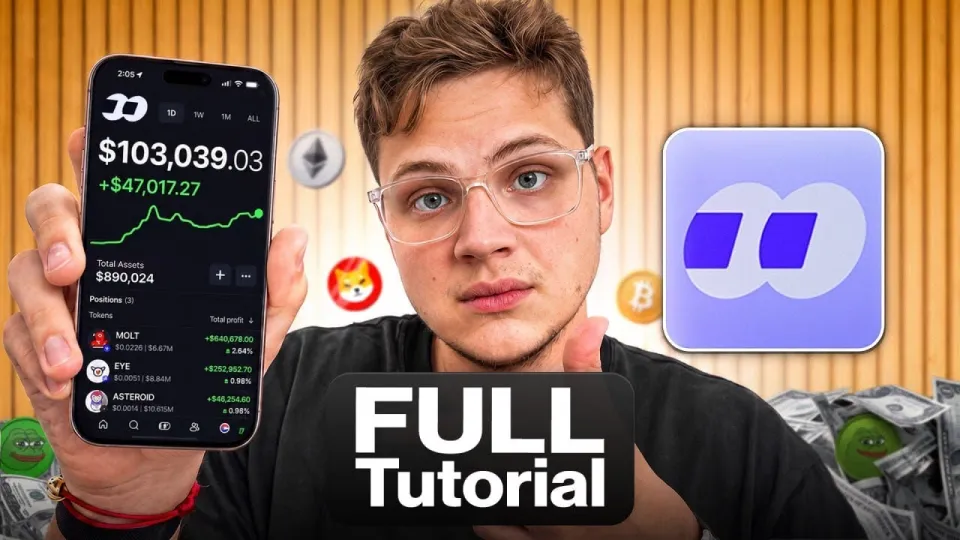
Video: How To Make Money Trading Memecoins (fomo app tutorial)
You can order the same kind of articles for your own video to boost it on YouTube and Google. Just message the Telegram bot @sat_sit_bot. It writes articles around your video, embeds the video and publishes them on popular niche websites (no ads). Try it free: 50 articles on us.
· based on the channel Orangie Web3
Key takeaways
- A meme coin is a token whose price rests on community attention and narrative rather than cash flow, revenue or product usage.
- Most memecoin volume in 2026 runs on Solana, where tokens launch in minutes and trading fees stay fractions of a cent.
- The fomo trading platform (fomo.family/r/orangie) is a mobile-first app for buying, selling and copy trading memecoins.
- Copy trading a profitable wallet usually means buying after the original buyer's entry, often on a separate wallet they loaded first.
- Copy trading is not investment advice and does not remove risk: liquidity can vanish and tokens can be abandoned by their creators.
A meme coin is a cryptocurrency whose value comes from community attention, humor and narrative instead of revenue, cash flow or a working product. You make money trading memecoins by buying attention early and selling it to later buyers, which means the edge is timing, position sizing and risk control rather than fundamentals. Tools like the fomo trading app compress that workflow into a phone screen: discovery, buy, sell and copy trading in one place.
What is a meme coin and why does it have value at all
A meme coin is a token with no cash flow attached, so its price is set purely by supply, demand and the story around it. Dogecoin is the original example, and the 2026 cycle runs on Solana tokens that launch through fair-launch tools and live or die within hours. Value comes from three things: attention (posts, raids, influencer mentions), liquidity (how much money sits in the pool to buy and sell against) and distribution (how many holders exist and whether a few wallets own most of the supply). When attention rises faster than supply, price goes up; when attention fades, the pool thins out and the price collapses. That is the whole mechanism, and it is why memecoin trading is closer to trading attention than to investing in a company.
How memecoin trading actually works on Solana
Memecoin trading is a four-step loop: find a token, check its contract and holders, size a position, and exit on a rule you set before entering. On Solana the loop takes seconds, because swaps settle in under a second and fees are negligible compared with Ethereum mainnet. The practical checklist most traders run before buying:
- Contract address — confirm you are buying the token you think you are, not a copy with a similar ticker.
- Liquidity — a pool with a few thousand dollars can be drained by a single seller; thin liquidity means your exit is the problem, not your entry.
- Holder distribution — if the top ten wallets hold most of the supply, the chart can be redrawn at will.
- Age and volume — a token that has traded for twenty minutes has no history to read.
- Narrative — a meme that is already everywhere has already been priced.
The fomo app in the Orangie Web3 walkthrough puts these checks next to the buy button, which is the main reason beginners find it usable: you see the chart, the holders and the trade panel in one flow instead of juggling four browser tabs.
How to trade memecoins in the fomo app step by step
The fomo app is a mobile-first memecoin trading platform where you connect a wallet, fund it and trade tokens from a feed. The general sequence looks like this:
- Open the platform through the referral link, create an account and connect a Solana wallet.
- Fund the wallet with SOL — a small amount first, so a mistake costs you a lesson rather than your savings.
- Browse the token feed, open a chart and read liquidity, market cap and holder count before touching the buy button.
- Set your position size in advance. A common rule among memecoin traders is 1–5% of the trading stack per position, because most of these tokens go to zero.
- Decide your exit before you enter: a target multiple, a stop, or a time limit.
- Use copy trading only after you understand what it does and does not do, which the next section covers.
One feature request that comes up repeatedly in the community around this app is price alerts. If alerts are missing on your version, treat manual exits and pre-set targets as mandatory rather than optional.
The truth about copy trading and "smart money" wallets
Copy trading means mirroring another wallet's buys and sells automatically, and it is the most misunderstood feature in memecoin trading. The wallet you copy is not obliged to be honest or early on your behalf. A large trader can buy a token on a separate wallet first, then buy on the wallet you are watching so that followers pile in and push the price up. By the time your copy order fills, you are the exit liquidity for the first buy. This is not a rare trick; it is a structural feature of transparent on-chain wallets. Copy trading also fails on speed: your transaction lands after theirs, at a worse price, and if they sell in the same block you never had a chance. Use copy trading as a discovery tool, not as a strategy, and never as a substitute for your own exit plan.
Why most memecoin traders lose money
Most memecoin traders lose money because they size positions for the win case and hold them through the loss case. Four failure modes account for the bulk of the damage: buying after the move is already public, holding a dead token hoping for a bounce, keeping the whole stack in a hot wallet, and trading with money that was needed for something else. Wallet drainers are real — one community member described losing an entire wallet and restarting with roughly $90, then making about $30 in a day and giving part of it back. That story is typical: the strategy was not the problem, the risk per trade was. Practical guardrails that survive contact with reality:
- Keep a separate hot wallet for memecoins and never connect your main holdings to new sites.
- Assume any token can go to zero and size accordingly.
- Take partial profits on the way up instead of waiting for a round number.
- Log every trade with entry, exit and reason, so you learn from data rather than memory.
Common questions from new memecoin traders
New traders tend to ask the same handful of things, and the answers are less exotic than the marketing suggests. How much do you need to start? On Solana, a few tens of dollars is enough to place real trades and feel the mechanics, because fees are tiny. How long does a memecoin trade last? Anywhere from minutes to a few days; the tokens that survive weeks are the exception, not the rule. Do you need to watch charts all day? No, but you do need alerts or limit orders if you cannot, because memecoin moves do not wait for your lunch break. Is it gambling? Trading a token with no cash flow and thin liquidity carries gambling-like risk, and the difference between the two is position sizing, record keeping and a written exit rule. Treat the first month as tuition, not income.
Useful links
- fomo trading platform (referral): https://fomo.family/r/orangie
- Orangie Web3 Discord community: https://discord.gg/memecoins
- Orangie on Instagram: https://www.instagram.com/orangieyt/
Bottom line on meme coin trading
A meme coin is an attention trade, not an investment thesis, and the traders who last are the ones who treat it that way. The mechanics are simple: find liquidity, size small, decide the exit before entry, and never outsource judgment to a wallet you are copying. Tools like the fomo app shorten the distance between idea and order, but they cannot shorten the distance between discipline and profit. The Orangie Web3 breakdown is a useful starting point precisely because it shows the workflow rather than promising a multiplier, and the channel is worth following for that reason. Start with money you can lose, register through https://fomo.family/r/orangie, and paper-trade the loop until it feels boring.
Questions & answers
What exactly is a meme coin?
A meme coin is a cryptocurrency with no cash flow or product behind it, priced purely by attention, liquidity and holder behavior. Dogecoin is the classic example, and most current launches happen on Solana through fair-launch platforms. Because there is no fundamental floor, price can fall to near zero without warning.
Is copy trading memecoins profitable for beginners?
Usually not, because the wallet you copy fills first and you fill later at a worse price. Large traders sometimes buy on a separate wallet before buying on the wallet followers watch, which turns copy orders into exit liquidity. Use copy trading to discover tokens, not to outsource decisions.
How much money do I need to start trading memecoins?
A few tens of dollars is enough on Solana, since swap fees are fractions of a cent. The more important number is position size: keeping each trade to 1–5% of your stack means a total loss on one token does not end your run. Fund a separate hot wallet so your main holdings stay disconnected from new sites.
Why do most memecoin traders end up losing?
They buy after the move is public, hold dead tokens hoping for a bounce, and keep the entire stack in one hot wallet exposed to drainers. Poor sizing turns a normal losing streak into a wipeout. Written exit rules, partial profit-taking and a trade log are what separate the survivors from the rest.
Source: How To Make Money Trading Memecoins (fomo app tutorial) · Markdown version